Stars Reach Planets & Exploration
How to survey living worlds, travel with purpose, and turn exploration into useful XP and resources.
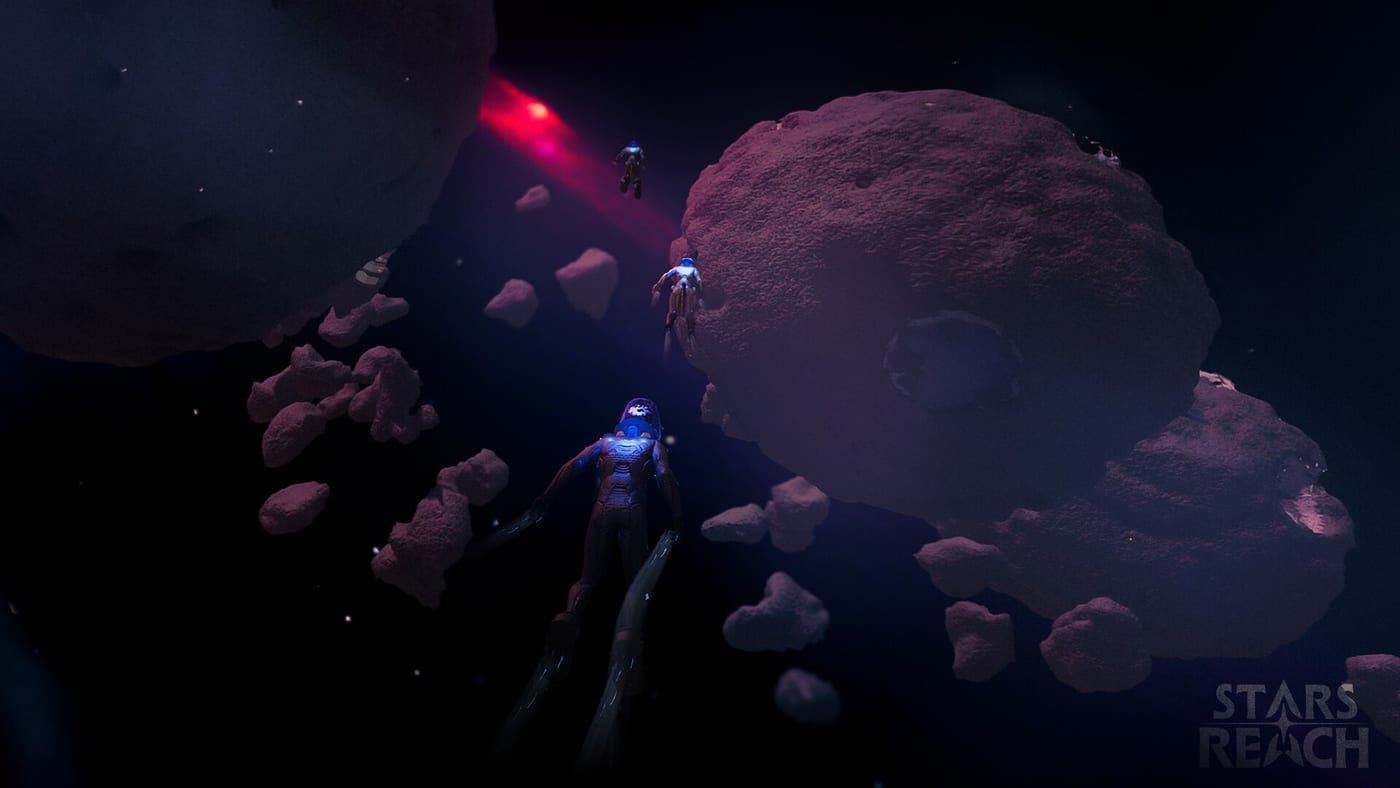
A shared galaxy of living worlds
Stars Reach is built around a single online galaxy of persistent planets and space zones. Worlds are not static wallpaper. Weather, flora, fauna, and player terraforming change what a place feels like from week to week. Early Access on Steam (August 18, 2026) will keep expanding that canvas, so treat every planet guide as a method, not a frozen map spoiler.
Exploration is not a side activity. Surveying, sampling, and Pathfinder-style scouting feed skill XP, unlock recipes, and tell you where rare materials actually live. Pair this page with resources & rarity, mining & terraforming, and the broader Systems Hub.
Why exploration matters in a sandbox MMO
Traditional theme-park MMOs send you down a quest highway. Stars Reach expects you to decide why you are traveling: a metal for a tool upgrade, a biome for farming, a safer plateau for a camp, or a survey objective that pays XP when other players later use your data. Useful travel beats empty tourism.
If you are brand new, finish the Haven → Crucible → TPL Starbase spine in Getting Started before you try to “see everything.” Crucible teaches planetary risk with training wheels still nearby. After that, exploration habits become your real progression engine.
Pathfinder, surveying, and reading a planet
Pathfinder tools and surveying skills help you sample what a planet contains. The goal is not to memorize every rock on day one. Build a personal atlas:
- Note biome type, hazards, and travel friction.
- Sample minerals and organics you have not catalogued yet.
- Mark spots that are good for camps versus spots that are good for short extract runs.
- Record which rarities appear so future crafting trips are deliberate.
Open the resource UI (often discussed as the F1 resource screen in playtests) when you need a rarity checklist. Cross-check with resources & rarity so you do not confuse “rare in generation” with “scarce on this one hill.”
Ecosystems react to players
Living ecosystems mean your mining tunnels, tree clearing, and terraforming beams leave consequences. Dig carelessly and you can collapse routes or flood useful ground. Clear flora without a replenishment plan and later harvesting becomes worse for everyone sharing the planet. Stars Reach wants those feedback loops—settlements sit on top of the terrain you create, so exploration and building settlements are the same story told at different scales.
When you reshape land, ask: am I making a future homestead better, or am I strip-mining a neighbor’s plateau? Coordinated digging with friends beats anonymous crater spam.
Travel logistics: camps, portals, and time boxes
Exploration fails when your inventory, camp, and skill terminals are poorly staged. Before a long survey loop:
- Place or join a camp you can actually find again after a death or logout.
- Know the nearest portal or Starbase route for spending XP with K (skill trees).
- Carry the tool set that matches the XP you want (extractor for mineralogy, Pathfinder for survey XP, light combat for wildlife).
- Keep a mental time box. Short useful sessions are first-class design in Stars Reach—five focused minutes of surveying beat an hour of lost wandering.
Read How to Play for the session mindset, and controls for grappler, scan, and resource-select binds that make traversal less painful.
Planetary diversity and craft planning
Different planets express different material properties. That is why exploration and crafting are linked. A metal found on one world may refine into components with better Potential, Quality, Resilience, or Value (PQRV) behavior for a given recipe. Do not assume every aluminum-looking node is identical forever—assay, refine, and compare outcomes.
Economy players should also track which planets become trade hubs versus extract zones. See economy & trading once you start shipping goods instead of living out of a backpack.
Space, clones, and social gravity
Stars Reach markets instant fun: download into a clone near friends, join their planet, and play. Exploration is still social gravity. For the practical highway—TPL Starbase, wormholes, and shopping-list planet hops—use the dedicated Space Travel guide. Follow community callouts on official and community links, watch Early Access launch and Server Slam news for travel congestion lessons, and treat patch notes as the authority when wormholes, skiffs, or hub layouts move.
Exploration checklist for Early Access week one
- Complete Haven teaching so survey tools make sense.
- On Crucible, map two extract routes and one safe camp area.
- Unlock enough Pathfinder or mineralogy nodes to make sampling feel rewarding.
- Bring one craft goal (for example a better Terraformer component chain) so travel has a shopping list.
- Share findings with friends—passive XP and reputation from useful data is part of the fantasy.
- Revisit the beginner checklist after your first successful planet hop.
Related reading
- Systems Hub for the full pillar list
- Mining & Terraforming for reshaping terrain safely
- Professions if you want an explorer-leaning start package
- Pack comparison and system requirements before launch day
Exploration in Stars Reach is a craft. Survey with intent, respect living worlds, and let every trip feed the next tool, settlement, or trade route.
Frequently Asked Questions
Quick answers to the most common questions.
Is Stars Reach one shared galaxy?
Yes. It is designed as a single online multiplayer galaxy of persistent planets and space zones rather than isolated private shards for the core fantasy.
What should I do first when I land on a new planet?
Survey hazards, sample unknown resources, mark a returnable camp or landmark, and pick one craft or XP goal so the trip stays useful.
Does terraforming affect settlements?
Settlements and camps sit on the terrain you create. Careless digging can ruin build sites or create hazards for everyone sharing the planet.
Where do I learn surveying tools?
Start with Haven onboarding, then practice on Crucible. Pair this page with Getting Started, Controls, and the Skills Hub.
Will every planetary feature ship on day one of Early Access?
No. August 18, 2026 begins Early Access, not a finished 1.0 galaxy. Verify live travel tools and planet counts in patches.